Turnkey microtransit lets an organization offer free rides without running a transit operation. Here are three ways it builds loyalty among the people you serve.
What is Turnkey Microtransit?
Turnkey microtransit is a shuttle service, within a defined zone, that one provider runs end to end: vehicles, drivers, charging, maintenance, insurance, and dispatch. The organization gets a working transit service without having to operate one.
What types of businesses can benefit?
Generally any type of business that employs or serves individuals in its immediate vicinity or has a business model predicated upon the movement of people.
This could include Continuing Care Retirement Communities (CCRCs), Transportation Management Associations (TMAs), Universities, and Hospitals, to name a few.
Of course efficient transit isn’t a need limited to only the aforementioned types of organizations and any institution can benefit from turnkey microtransit.
What does this mean for businesses?
Businesses are presented with the unique opportunity to solve a consumer and employee pain point with one solution while improving the connectedness of surrounding communities.
With FreeFly, your organization sponsors a dedicated, all-electric zone in Greater Boston, riders pay nothing, and service levels are set in your contract.
1. Closing transit gaps between communities
Many of the people you serve live a few miles away but have no practical way to reach you. The bus doesn’t go there, or the transfer takes longer than the trip itself. A sponsored microtransit zone connects those neighborhoods directly to your location at no cost to the rider. Riders remember who made that connection possible, and they tell their neighbors.
2. Providing a first-mile and last-mile solution for individuals who don’t drive
The hardest part of many trips is the stretch between the nearest T station and the final destination. For employees, students, and visitors without a car, that gap decides whether they come at all and how they feel when they arrive.
Covering it turns a daily frustration into a reason to choose you, and people talk about the places that make their lives easier.
3. Providing a tailored solution for individuals with transit challenges
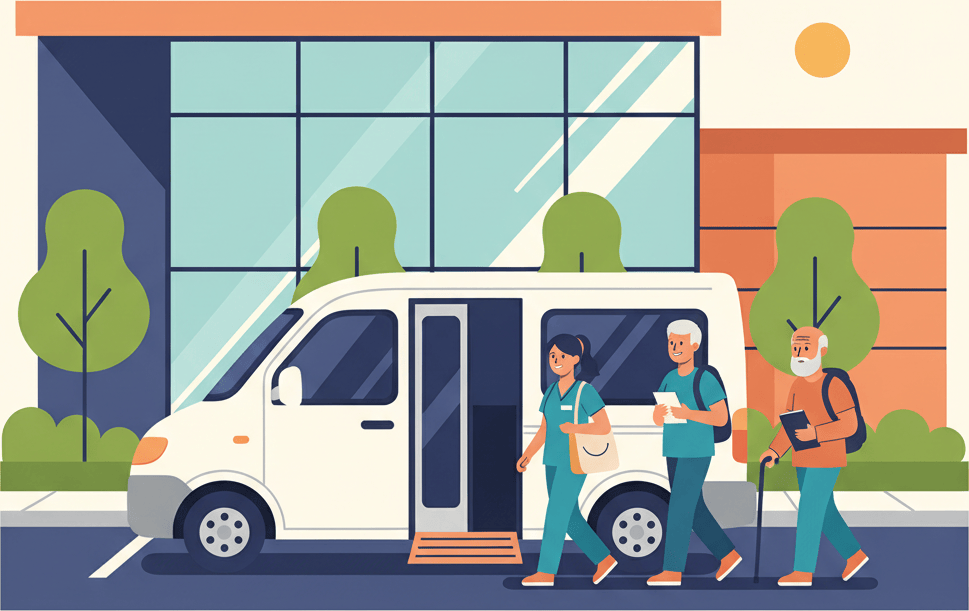
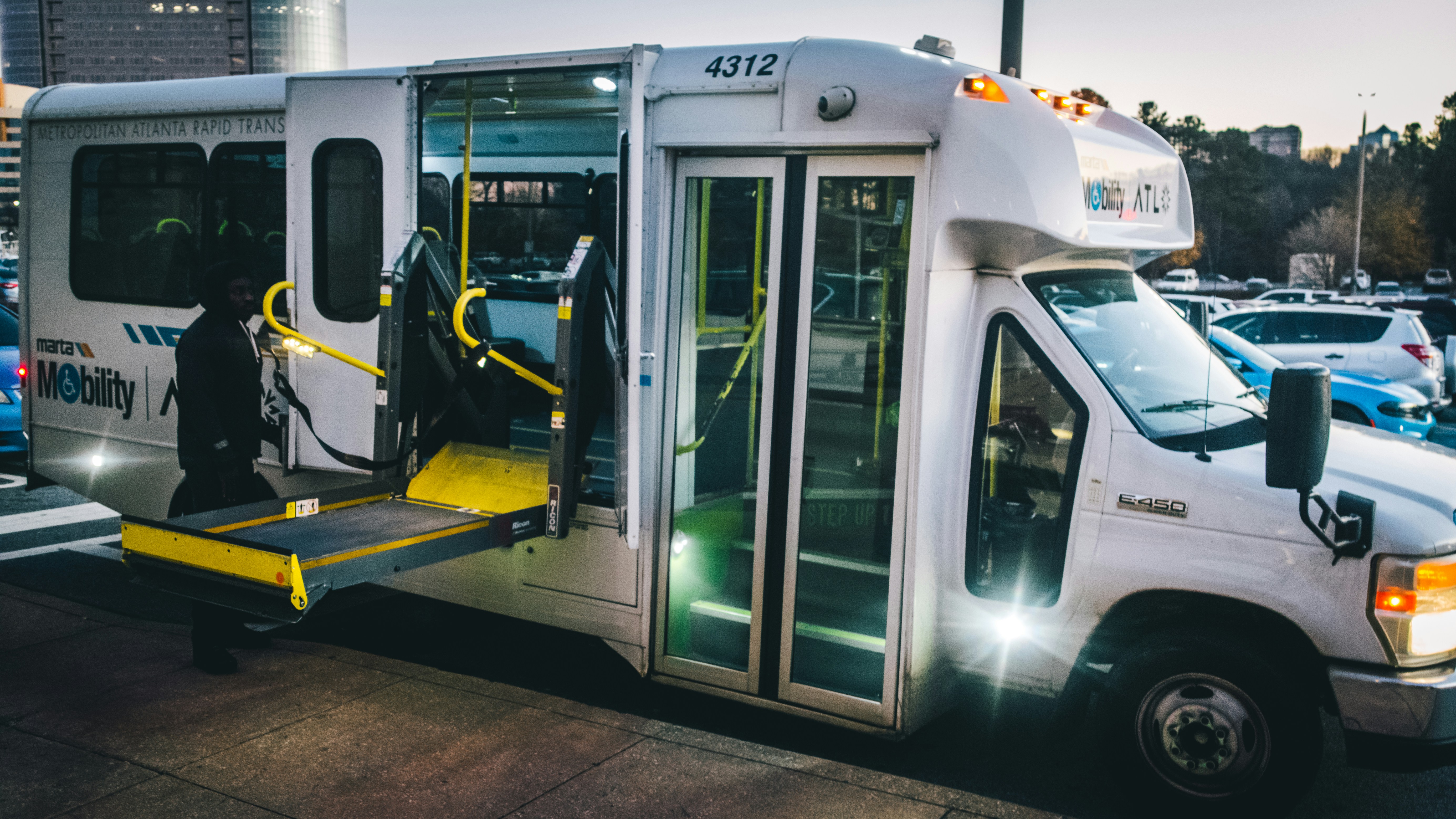
Older adults, people with disabilities, and riders with low vision often find fixed-route transit hard to use and ride-hailing too expensive to rely on.
A dedicated zone can be built around the stops and service hours your community actually needs. Families and caregivers remember who took care of the people they love, and that kind of trust spreads by word of mouth.
Want to see what a zone would look like for your community? Talk to FreeFly.
The Healey-Driscoll Administration’s $10 million bet on microtransit signals more than a one-time grant: it’s a structural shift in how Massachusetts plans to electrify transportation. Here’s what every Greater Boston sponsor and municipal leader should know.
In March 2026, the Healey-Driscoll Administration awarded $10 million through MassDOT’s newly-established Microtransit and Last Mile Transit Grant Program. It was a relatively quiet announcement, but it signaled something loud: Massachusetts has decided that small, on-demand, electric-friendly transit is no longer an experiment: it’s policy.
For anyone watching where clean mobility is headed in the Commonwealth, this matters.
The Climate Math Is Unforgiving
Transportation is the single largest source of greenhouse gas emissions in Massachusetts, accounting for roughly 38% of statewide emissions in the most recent state inventory; that’s more than buildings and more than electricity. State law doesn’t care whether that number is convenient. The Global Warming Solutions Act, as updated by the 2021 Next-Generation Roadmap, requires Massachusetts to cut transportation-sector emissions 34% below 1990 levels by 2030 and reach net-zero across all sectors by 2050.
To stay on course, the state set targets of 200,000 EVs on the road by the end of 2025 and 900,000 by 2030. According to the 2025 Massachusetts Climate Report Card, the state ended 2025 at 166,296 EVs, short of its goal.
The state’s response is telling. Rather than retreating from its climate targets, Massachusetts is doubling down on the strategies it controls: building out charging infrastructure (the state is now the national leader in charger density), electrifying medium and heavy-duty vehicles, with registrations of those jumping 140% in 2025, and investing in alternatives that get people out of single-occupancy cars in the first place.
That’s where microtransit enters the picture.
What MassDOT Just Funded
The Microtransit and Last Mile Transit Grant Program was established with $10 million in Fair Share funding through the FY25 supplemental state budget. In its first cycle, MassDOT awarded nine grants totaling $10 million. Among the recipients:
Salem received $1 million to continue the Salem Skipper, an on-demand microtransit service serving Salem, Beverly, and Danvers.
Woburn received $1 million to pilot a new regional microtransit service in partnership with Burlington, Wakefield, and Reading.
Fourteen Regional Transit Authorities received a combined $3.25 million through a joint application to expand microtransit across communities statewide.
Northampton received $1.5 million to expand the ValleyBike electric bikeshare network.
Quincy received $250,000 to extend the Bluebikes system across the Neponset River.
The program’s stated priorities tell you where Massachusetts is going. MassDOT was directed to favor projects that extend service to veterans, working families, older adults, people with disabilities, and low-income individuals.
The state wants flexible, accessible, equity-oriented transit. Service that fills gaps.
The Funding Tailwind Is Bigger Than One Grant
The microtransit grant is one of several converging tailwinds.
The November 2024 climate law, An Act Promoting a Clean Energy Grid, Advancing Equity, and Protecting Ratepayers, consolidated and accelerated the permitting process for clean energy infrastructure, expanded the state’s EV charging network and incentives.
MassCEC’s Clean Transportation programs offer free fleet assessments, charging-infrastructure design support, and a $50 million evergreen climatetech fund for early-stage Massachusetts companies building toward decarbonization.
MassDEP’s heavy-duty vehicle electrification program has been making competitive awards of up to $500,000 per applicant to replace older diesel shuttle buses with electric versions. This initiative was funded through the Volkswagen settlement and the state’s Climate Protection and Mitigation Trust.
In August 2025, Massachusetts announced an additional $46 million through FY27 for EV charging infrastructure. And Governor Healey’s $10 billion energy affordability plan, introduced in 2025, layers cost-relief mechanisms on top of the climate work. This serves as a strong signal that decarbonization and affordability are being treated as the same problem rather than competing ones.
Taken together, this is the most coordinated state-level push for clean micro-mobility Massachusetts has ever seen.
What This Means for FreeFly, and for Boston
FreeFly was incorporated in Massachusetts in December 2025 with one thesis: zero-fare electric micro-transit, funded by the businesses and institutions that benefit from it, is the right operating model for a state that has to electrify transportation while keeping it affordable for residents.
The Commonwealth’s policy environment is now actively rewarding that thesis.
Every hospital system, university, assisted living provider, transportation management association, sports venue, and municipality looking at how to fill the last-mile gap in their service area is operating in a funding environment where:
The state is putting real capital behind microtransit, and the first round of grants will not be the last.
Permitting for clean infrastructure is faster than it used to be.
Fleet electrification has free technical support and meaningful grant matches available.
Communities that adopt accessible, equitable transit get prioritized for state dollars.
For sponsors, this means partnering with FreeFly is no longer just a marketing or service decision: it’s an alignment with where Massachusetts is putting its weight. For municipal leaders, it means a private operator built specifically for the Massachusetts regulatory and funding environment is now available as a partner for grant-eligible programs.
The Bottom Line
Massachusetts is not waiting for federal climate policy to come back into focus. The state is building the funding architecture, the regulatory framework, and the political will to electrify shared transportation on its own terms.
Microtransit is now a recognized, funded, and prioritized piece of that architecture. The question for any Greater Boston organization with a transit gap is no longer whether to act, it’s how quickly to move while the policy and funding environment is this favorable.
FreeFly’s sponsor-funded electric micro-transit gives assisted living and nursing home residents reliable, zero-fare rides across Greater Boston, without adding a line item to resident fees.
Walk into almost any assisted living community in Greater Boston and you’ll find the same quiet problem tucked behind the lobby: a transportation schedule that doesn’t quite work.
Maybe the facility van runs three days a week. Maybe it only goes to the pharmacy and the hospital, but not to a daughter’s house two miles away. Maybe there’s one driver, and when she takes a vacation, the schedule collapses. Residents adapt: they skip the optometrist, call a grandchild for a ride, or stop going out altogether.
That adaptation has a cost. In a 2024 national survey, 64% of seniors named lack of transportation as a top social barrier to their health, second only to the challenges of aging in place itself. Research reviewed by the National Council on Aging shows that seniors facing transportation barriers are significantly less likely to get preventive care, and that transportation difficulties are linked to higher rates of missed appointments, medication non-adherence, and preventable hospitalization.
This isn’t a niche operational issue. It’s a care issue.
What facility operators are actually dealing with
We talked to operators across the Boston area who tell us some version of the same story:
The facility van is expensive to run and under-utilized: it costs real money whether it makes one trip a day or ten.
Scheduling is rigid. Residents have to book days in advance, and there’s almost never capacity for a spontaneous trip.
Driver turnover is constant. Every departure creates a coverage gap.
Ride-share isn’t a real substitute. Uber and Lyft aren’t built for a resident who needs help out the door, doesn’t use a smartphone, or gets nervous with an unfamiliar driver.
Families notice. When a parent says “I couldn’t get a ride to the pharmacy again,” it becomes a conversation about whether the facility is the right fit.
None of the existing options were designed for a resident population that needs frequent, short, low-friction trips to destinations within a few miles of home.
How FreeFly fits
FreeFly is a zero-fare electric micro-transit service built around that exact gap. Here’s how it works for a facility:
The facility becomes a zone sponsor. For a monthly fee, FreeFly establishes a defined service zone centered on the facility and the destinations residents actually use. Pharmacies, grocery stores, medical offices, local parks, places of worship, and family homes are all now within range.
Residents ride free. No fare required; staff or residents request a ride, and a FreeFly electric shuttle shows up.
The facility’s van becomes optional, not essential. FreeFly isn’t replacing clinical transport or specialized medical trips: it’s absorbing the everyday volume that used to eat up the van’s schedule.
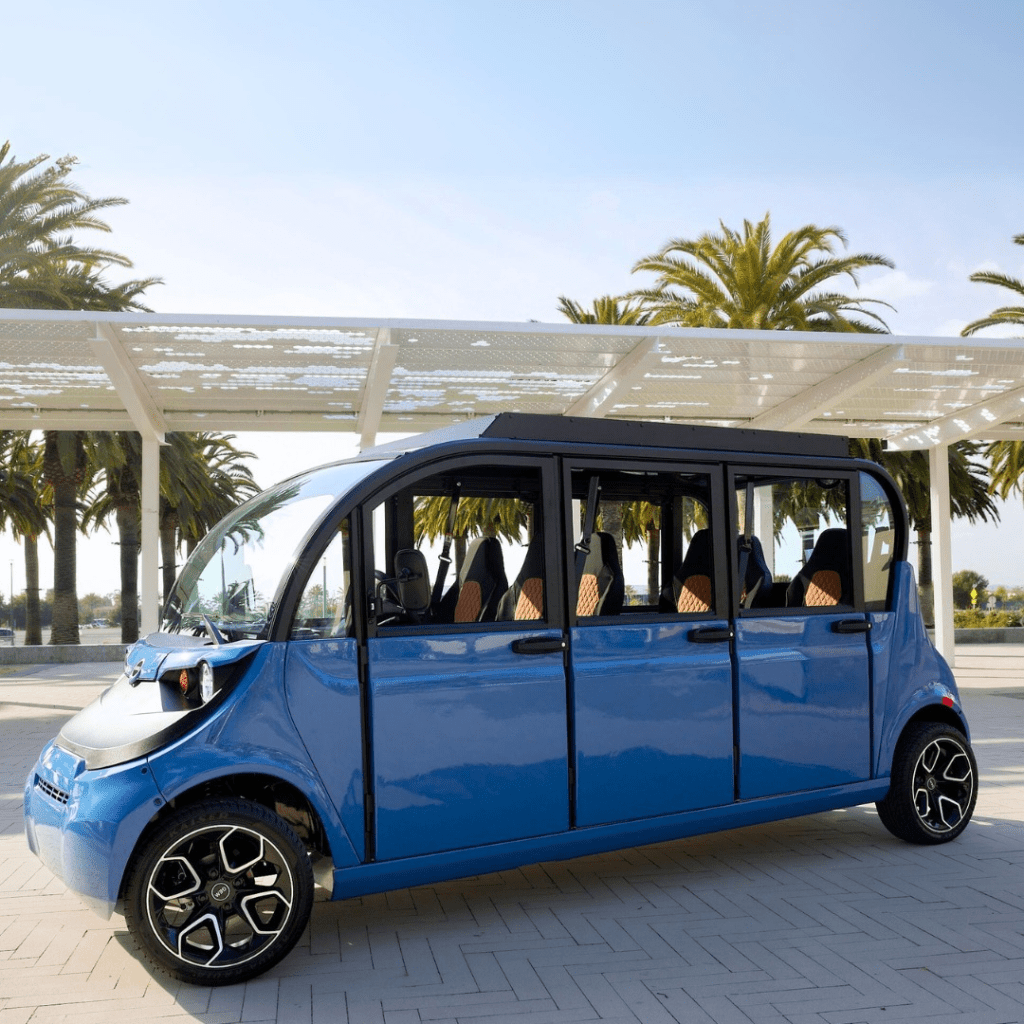
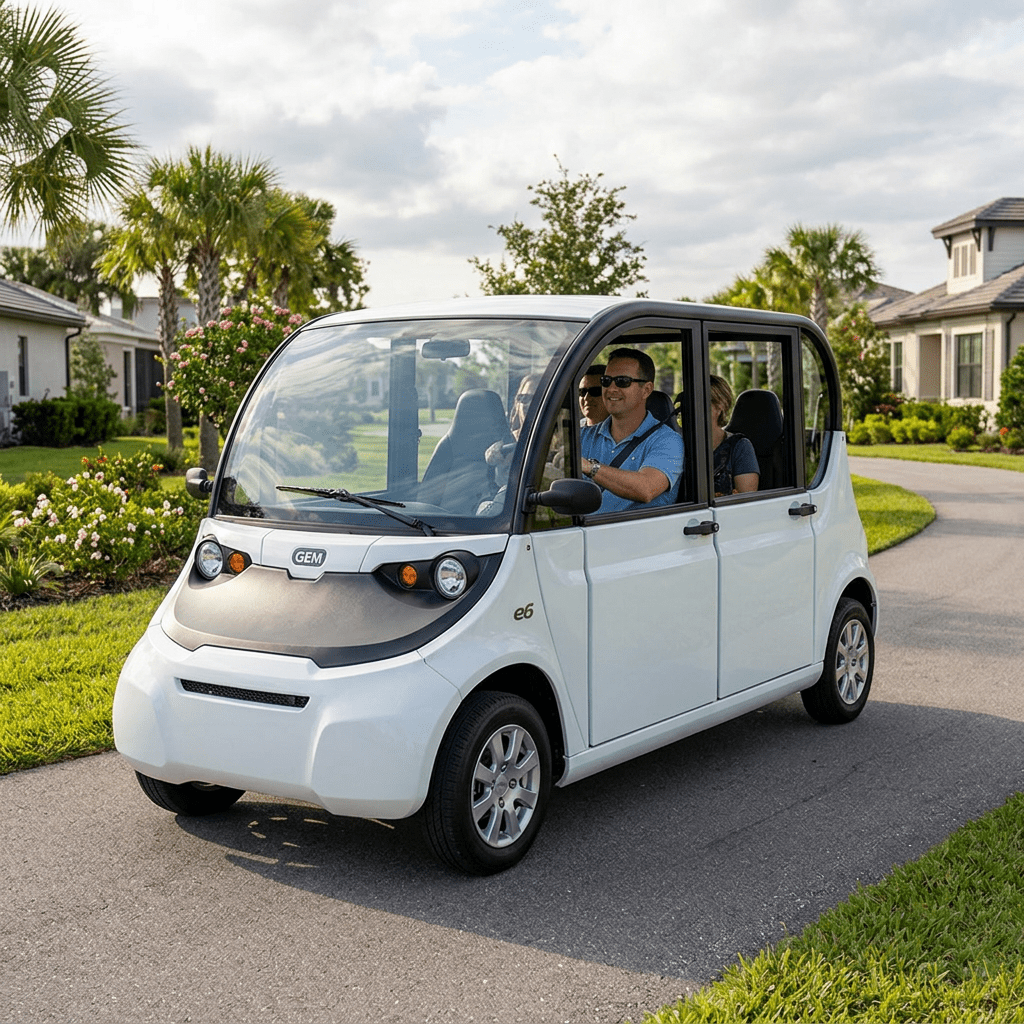
Rides are short, local, and electric. FreeFly’s GEM E6 shuttles are sized for neighborhood trips, purpose-built for the kind of 1-to-5-mile rides that make up the bulk of senior transportation needs.
The model is deliberate: residents pay nothing, the facility pays a predictable monthly sponsorship, and FreeFly handles vehicles, drivers, insurance, and dispatch.
The bottom line for operators
For the cost of a predictable monthly sponsorship, a facility can offer residents something closer to on-demand local mobility, without hiring a driver, maintaining a van, or passing costs to residents or their families. It’s a clean operational line item that directly improves resident quality of life, family satisfaction, and the facility’s own marketing story.
If you operate an assisted living or nursing home facility in Greater Boston and want to talk about what a FreeFly zone would look like for your community, we’d like to hear from you.