
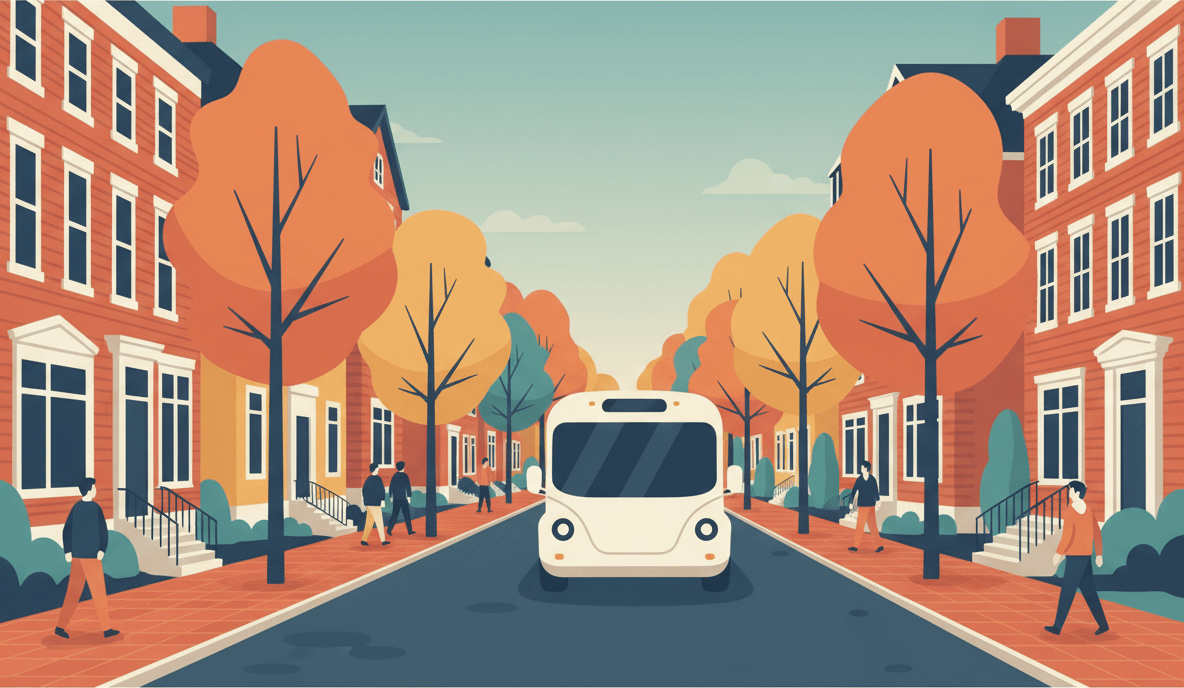
What is Turnkey Microtransit?
Turnkey microtransit is a shuttle service, within a defined zone, that one provider runs end to end: vehicles, drivers, charging, maintenance, insurance, and dispatch. The organization gets a working transit service without having to operate one.
What types of businesses can benefit?
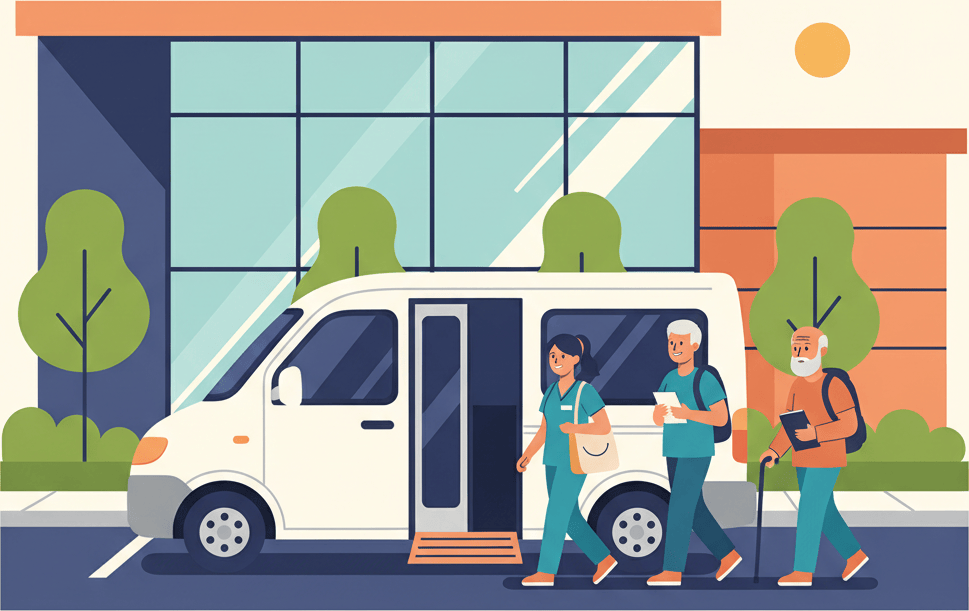
Generally any type of business that employs or serves individuals in its immediate vicinity or has a business model predicated upon the movement of people.
This could include Continuing Care Retirement Communities (CCRCs), Transportation Management Associations (TMAs), Universities, and Hospitals, to name a few.
Of course efficient transit isn’t a need limited to only the aforementioned types of organizations and any institution can benefit from turnkey microtransit.
What does this mean for businesses?
Businesses are presented with the unique opportunity to solve a consumer and employee pain point with one solution while improving the connectedness of surrounding communities.
With FreeFly, your organization sponsors a dedicated, all-electric zone in Greater Boston, riders pay nothing, and service levels are set in your contract.
1. Closing transit gaps between communities
Many of the people you serve live a few miles away but have no practical way to reach you. The bus doesn’t go there, or the transfer takes longer than the trip itself.
A sponsored microtransit zone connects those neighborhoods directly to your location at no cost to the rider. Riders remember who made that connection possible, and they tell their neighbors.
2. Providing a first-mile and last-mile solution for individuals who don’t drive
The hardest part of many trips is the stretch between the nearest T station and the final destination. For employees, students, and visitors without a car, that gap decides whether they come at all and how they feel when they arrive.
Covering it turns a daily frustration into a reason to choose you, and people talk about the places that make their lives easier.
3. Providing a tailored solution for individuals with transit challenges
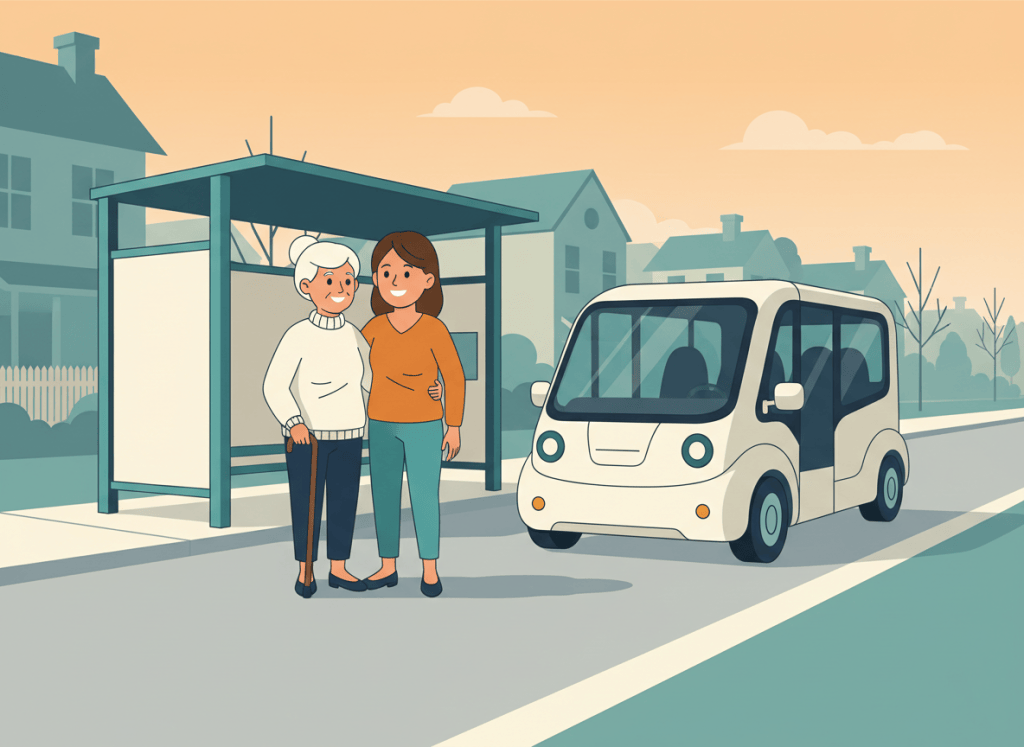
Older adults, people with disabilities, and riders with low vision often find fixed-route transit hard to use and ride-hailing too expensive to rely on.
A dedicated zone can be built around the stops and service hours your community actually needs. Families and caregivers remember who took care of the people they love, and that kind of trust spreads by word of mouth.
Want to see what a zone would look like for your community?
Talk to FreeFly.

